The blueprint for clothes
Every garment starts with a pattern. Whether you're a designer bringing a sketch to life, a brand needing production-ready patterns, or someone who wants to recreate a favourite piece, professional pattern making turns ideas into something that can actually be made.
Our network includes pattern makers who work with independent designers, small fashion labels, and individuals. From single custom patterns to graded size ranges ready for production, they translate design concepts into precise cutting templates.
Get a Quote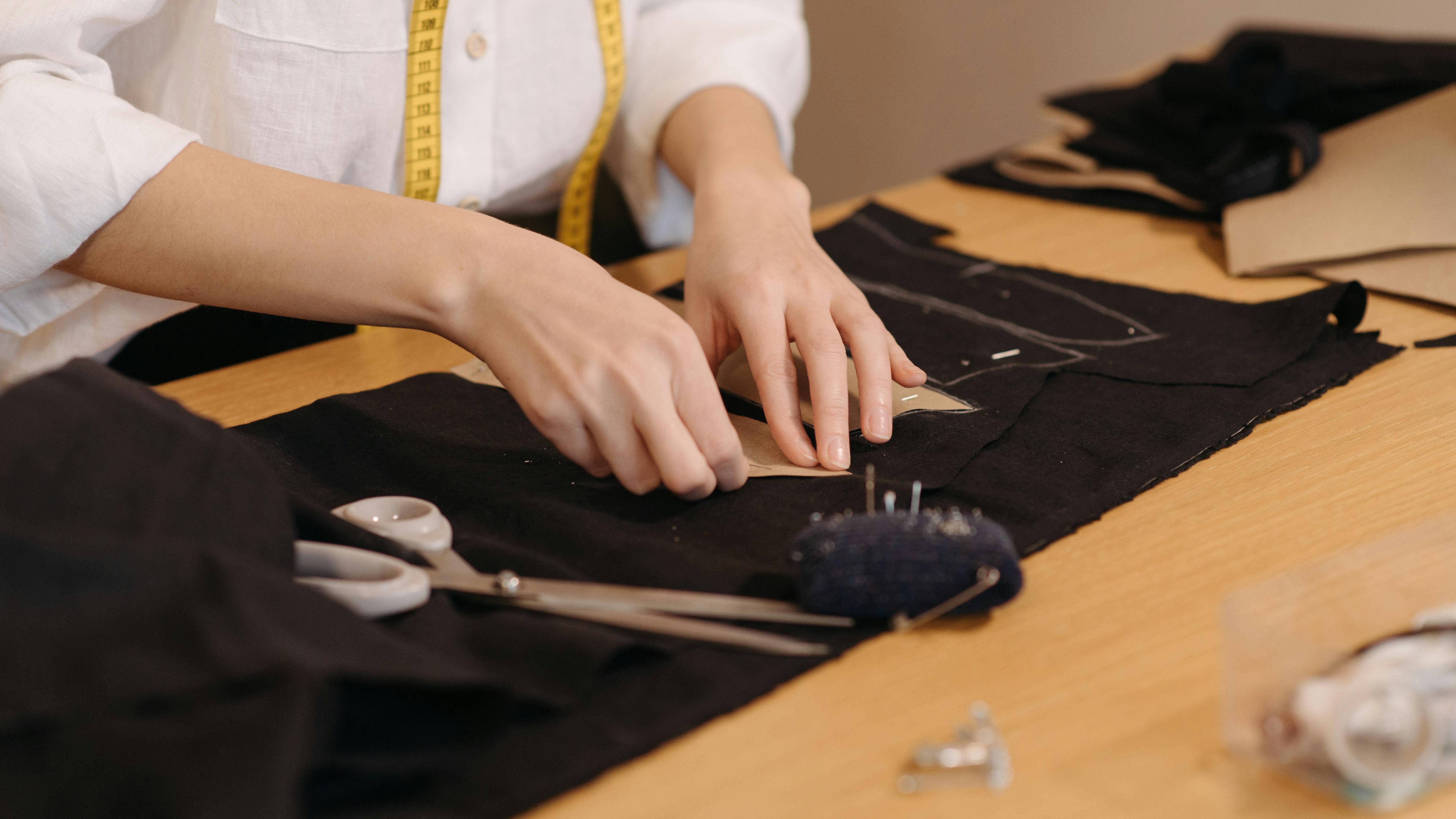
Pattern services
What our pattern makers can help with:
How pattern making works
Design input
You provide reference material. This might be sketches, tech drawings, photographs, an existing garment, or detailed descriptions. The more information the pattern maker has, the better they can interpret your vision.
Measurements
For custom patterns, body measurements or standard size specifications are needed. The pattern maker may need measurements you haven't considered. For graded patterns, the size range and any brand-specific fit preferences are established.
Pattern drafting
The pattern is created, either by flat drafting or draping. Each pattern piece is drawn, including seam allowances, grain lines, notches, and any markings needed for construction.
Testing (toile)
For most projects, a test garment in calico is made to verify fit and construction. Adjustments are noted and the pattern is refined. This step catches issues before expensive fabric is cut.
Final pattern
After toile adjustments, the final pattern is produced. This may be paper, card, or digital format depending on your needs. If grading is required, the size range is created from the approved base pattern.
Who needs pattern making services
Fashion designers
Turning sketches and concepts into production-ready patterns. From initial sample patterns through to graded production patterns across a size range.
Small fashion brands
Creating patterns that can be sent to manufacturers, with appropriate specifications, grading, and technical documentation.
Home sewers
Getting a custom pattern made for a difficult-to-fit body, replicating a favourite garment, or having a commercial pattern adjusted for better fit.
Dressmakers & tailors
Developing base patterns for clients with non-standard measurements, or creating patterns for bespoke garments.
Frequently Asked Questions
What is pattern making?
Pattern making is the process of creating the paper (or digital) templates used to cut fabric for a garment. Each piece of a garment, from front bodice to sleeve to collar, has its own pattern piece. Together, these pieces form the blueprint for construction. Good pattern making is the foundation of well-fitting clothes.
What's pattern grading?
Grading takes a single-size pattern and scales it up or down to create a range of sizes. It's not simply making everything bigger or smaller by the same amount; different body measurements scale differently. Professional grading follows industry standards to ensure each size maintains correct proportions.
Can you make a pattern from an existing garment?
Yes. This is called "reverse engineering" or "copying" a pattern. The garment is carefully measured and traced, then a pattern is drafted to replicate it. This can be useful for recreating a favourite piece, creating a backup pattern for a garment you love, or making a base pattern for modifications.
What's the difference between flat pattern making and draping?
Flat pattern making works in two dimensions, using measurements and calculations to draft patterns on paper. Draping works in three dimensions, pinning fabric directly on a dress form to create the shape, then transferring this to a flat pattern. Both methods are valid; the choice depends on the design and the pattern maker's preference.
Do I need a toile before the final pattern?
For complex or fitted garments, usually yes. A toile (test garment in cheap fabric like calico) lets you check the fit before cutting your real fabric. Adjustments are made on the toile, then transferred back to the pattern. For simple designs or experienced pattern makers, a toile may not be necessary.
Need a pattern made?
Tell us about your project. We'll connect you with a pattern maker who can help.
Get a Quote