Fix it, don't bin it
A broken zip doesn't mean the jacket is finished. A moth hole doesn't have to end a jumper's life. A split seam takes minutes to fix. Most clothing damage is repairable, often for a fraction of the replacement cost.
Good mending ranges from purely functional (getting the garment wearable again) to nearly invisible (you'd never know it was damaged). What's achievable depends on the damage, the fabric, and how much time and skill goes into the repair.
Get a Quote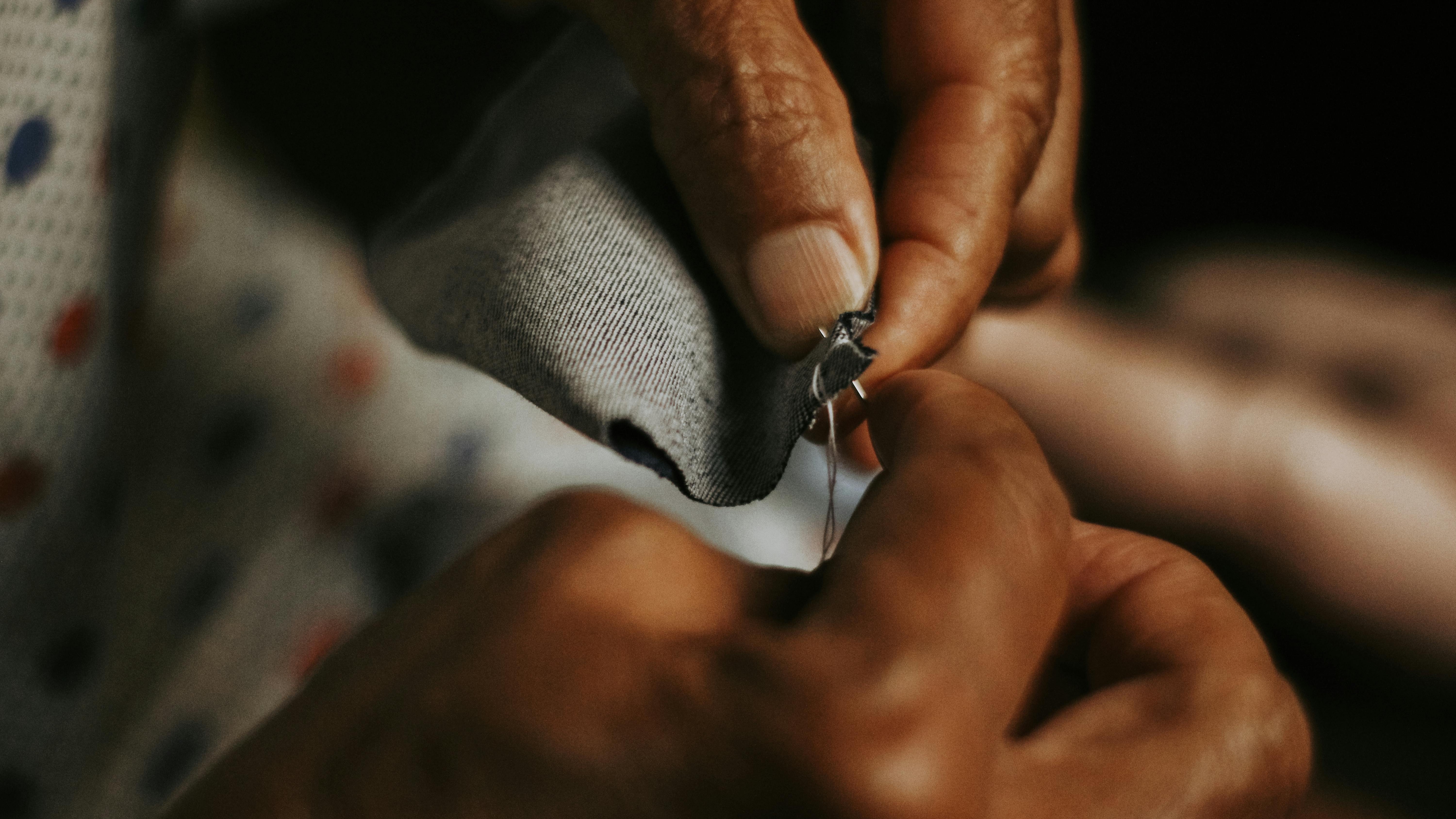
Common repairs
What we can help fix:
Repair techniques
Darning recreates lost fabric by weaving new threads across a hole. It works by laying parallel threads in one direction, then weaving perpendicular threads through them, replicating the original weave or knit structure. Done well, darning can be nearly invisible. It works best on natural fibres like wool and cotton.
Swiss darning (also called duplicate stitch) is specifically for knitted garments. It traces over the existing knit pattern with matching yarn, reinforcing worn areas or covering small holes. Because it follows the original stitch pattern, it maintains the fabric's stretch and drapes naturally.
Patching can be visible (a decorative patch on the outside) or hidden (a patch behind the hole with darning on top). For jeans and workwear, visible patches add character. For finer garments, backing patches provide structure while invisible mending covers the damage.
Re-weaving is the most invisible repair for woven fabrics. Individual threads from a hidden part of the garment (like a seam allowance) are extracted and woven into the damaged area, literally reconstructing the original fabric. It's time-consuming and not possible on all fabrics, but for valuable garments it's worth considering.
Visible mending
Not all repairs need to be invisible. Visible mending treats repairs as a feature, using contrasting thread, decorative stitches, or colourful patches. Japanese techniques like sashiko and boro turn mending into an art form. If invisible repair isn't possible, visible mending can give a garment new life and character.
Frequently Asked Questions
What is invisible mending?
Invisible mending aims to repair damage so it can't be seen. For woven fabrics, this often means re-weaving the original threads or using matching thread to replicate the weave across a hole. For knits, techniques like Swiss darning (duplicate stitch) reconstruct the original knit pattern. True invisible mending takes skill and time, and works best on smaller holes in quality fabrics.
Can moth holes be fixed?
Usually, yes. Small moth holes in knitted garments can be darned or rewoven. The technique creates new threads that replicate the original knit structure. On woven wool, the repair may involve re-weaving. The visibility of the repair depends on the fabric, the skill of the mender, and the size of the damage. Larger holes or heavily eaten areas are harder to make truly invisible.
When should a zip be replaced rather than repaired?
If the zip teeth are damaged or missing, replacement is usually needed. If the slider has come off but the teeth are intact, sometimes a new slider can be fitted. If the fabric tape alongside the zip is torn, a new zip is typically the best solution. Your seamstress will assess whether repair or replacement makes more sense.
What's the difference between darning and patching?
Darning weaves new threads across a hole to recreate the fabric structure. It's often used on knits and can be made quite invisible. Patching places a piece of fabric over or behind the hole. It's quicker but more visible. Some repairs combine both, with a backing patch for strength and darning on top for appearance.
Can torn fabric be repaired?
Rips along seams are usually easy to fix by re-stitching. Tears in the middle of fabric are trickier. If the fabric edges can be brought together, careful stitching can close the gap. If fabric is missing or the edges are frayed, a backing patch may be needed. The repair may remain somewhat visible depending on the fabric and tear location.